Response by Bromley Liberal Democrats to the Bromley Council draft Air Quality Action Plan
15/10/26
We welcome the publication of Bromley's draft Air Quality Action Plan and support the Council's commitment to improving air quality beyond current legal requirements and towards World Health Organisation guideline levels. The document recognises the health impacts of air pollution, particularly on children, older people and those with existing health conditions.
However, the plan also demonstrates that while nitrogen dioxide levels have continued to improve substantially, progress on PM10 and PM2.5 has largely stalled and, in some cases, got worse.
We would like to see the plan strengthened in the following areas:
Improved Monitoring
The Action Plan identifies PM2.5 as the pollutant with the greatest long-term health risk, but there is currently only one automatic monitoring station measuring particulate pollution. Although the borough uses diffusion tubes around the borough, these tubes monitor only nitrogen dioxide not particulate matter. In a borough the size of Bromley, with significant differences between urban centres, major roads and suburban areas, a single monitoring location is insufficient to provide the information residents need to measure both the current risk and any improvements or deterioration. It crucially cannot identify particular hot spots that would benefit from further measures. The Action Plan should include a programme to expand real-time monitoring of PM2.5 across the borough with the data being publicly available.
Domestic wood burning
Domestic wood burning contributes around 25% of PM2.5 emissions in Bromley, making it one of the largest single sources of harmful particulate pollution. Yet the proposed actions focus mainly on awareness and enforcement of existing smoke control regulations. The Council should consider stronger public awareness campaigns, clearer reporting arrangements, and exploring additional measures to discourage unnecessary domestic wood burning.
Transport
While the Action Plan supports some active travel and electric vehicle charging infrastructure, it rules out other measures that have been shown to be effective in other boroughs, including wider use of 20mph zones, incentives for cleaner vehicles and looking at cycling initiatives.
Targets
The Action Plan sets targets for NO2 and PM2.5 by 2031, but these targets do not measure whether air quality has actually improved. There should be measurable environmental outcomes so residents can see whether progress is being achieved.
Schools and other vulnerable groups
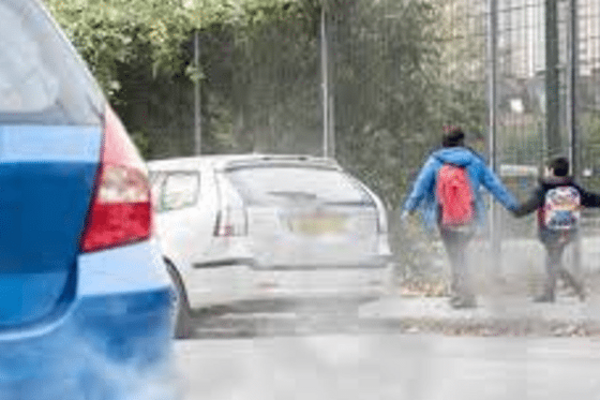
The Action Plan identifies the importance of the impact of air pollution on children and vulnerable residents, but there should be more ambitious plans to work with schools on projects like active travel and air quality projects.
Air Quality Hotspots
With limited monitoring we can’t identify all the pollution hotspots in the borough, but the Action Plan specifically identifies pollution on major roads, in Bromley Town Centre, and Elmers End. There should be clearer information for residents in these areas together with plans for specific actions to improve the air quality in these areas.
Summary
We support the ambition of the Action Plan to continue to improve Bromley's air quality. But there should be more emphasis on measures that directly address the PM2.5 and PM10 emissions given that these are the pollutants with the greatest health risks. Even if the steps outlined in the plan are followed, Bromley is still expected to exceed WHO guidelines in 2030.